What is the Real Flavor of DevOps?
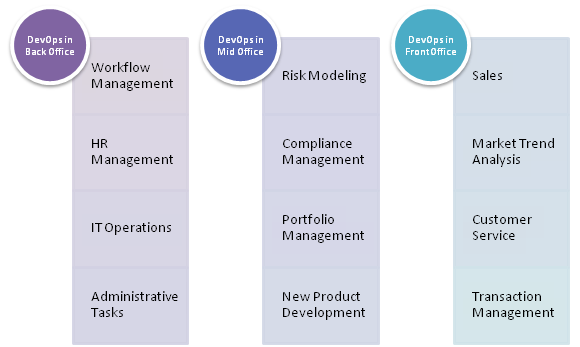
DevOps have certain compelling advantages when it comes to agility. However, the key to any successful deployment generally depends on the approach you choose for DevOps.
Traditional businesses and industries are tempted to take up DevOps. But one must understand that it is very important to opt for DevOps training so that the method can be deployed for improved agility. Nonetheless, just like public vs. private cloud debate, DevOps methodology isn’t only about the technical aspect and capability. To have a successful DevOps is definitely a challenge for any organization.
DevOps can be broken into three different categories:
Developer-driven DevOps Features
Developer-driven DevOps has been a popular feature. Some people also called it infrastructure code due to ease of use. This particular application can control the infrastructure, specifically management plane of applications that dictates infrastructure. Netflix is one of the finest examples of DevOps culture today. High Availability is also a good example.
Applications are usually designed to operate continuously even if its underlying infrastructure is faulty. For instance, if the VM hosting application frontend fails, management plane of that application can spend up other instances.
Infrastructure-based Development
In conventional infrastructures, developers are considered customers of the entire infrastructure team. The team provides highly available infrastructure, which developers use for writing applications. These applications may ignore the underlying infrastructure. Rather than creating a unique infrastructure control plane in the application, developers generally write to individual operating systems. On the other hand, the infrastructure team always ensures that the operating system has a resilient infrastructure. Applications availability depends entirely on redundant infrastructure that is managed by infrastructure group.
The gap in application design is an approach that exposes the challenges of moving to developer-driven DevOps model. Presently, most enterprise applications are created for conventional infrastructures. You can find only a few application needs for the developer-driven DevOps in the traditional enterprise. You can find only a few developers who can really understand the infrastructure well and deploy applications to control Greenfield infrastructure.
Operation-driven DevOps
The operation-driven model is the one in which infrastructure adopts a few development tools for managing the overall infrastructure. Conventional operation teams possess development skills to implement automation as well as configuration management tools like Chef, Ansible and Puppet.
Whereas this is one major area of development over the manually configured infrastructure, it is also a far cry from driven infrastructure which powers the latest Netflix. Operations teams have a developer mindset and better understanding. However, it is very important to eliminate the barriers lying between the idea (concept) and execution. This particular app does not remove barriers between developer and infrastructure.
Platform 2.5 Environment
IT leaders aim to improve agility with the DevOps. Platform 2.5 is one of the finest approaches that have gained momentum. From the technology perspective, it can be used as a data center to segment a portion of infrastructure to allow developer-driven DevOps to work. From a practical viewpoint, it could also be used as a simple tool to give developers infrastructurebased on the Docker containers. Furthermore, developers can use these Docker APIS for developing and managing applications. Additionally, developers can also build a Platform 3.0 application to control a subset of infrastructure. Finally, it is the infrastructure team that controls the basic infrastructure.
There are certain challenges faced by developers with this type of an environment, which includes capacity management of underlying infrastructure, troubleshooting, and performance monitoring. On the brighter side, it is a safer environment for experimenting with an innovative operating model. Organizations, however, are working their way through various challenges of the operating systems and the issues seem to fade. For the ones who desire a developer-oriented as well as driven infrastructure, it could be the way ahead without hindering the existing operations.
Stay Connected to Indian America
Get the latest community stories, local events, entertainment and lifestyle updates delivered to your inbox.


