Why Use J2EE For Distributed Multi-tiered Applications
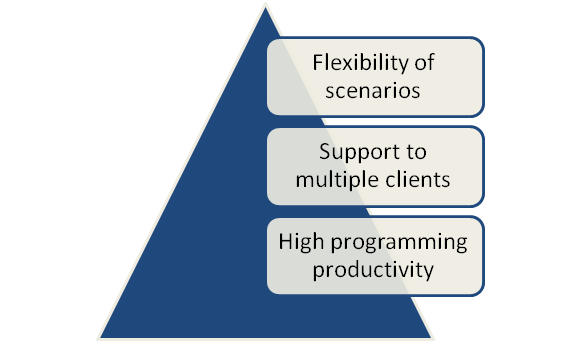
J2EE undoubtedly offers one of the most suitable platforms for distributed and multi-tiered applications. But the pertinent question is what makes it so suitable for such multi-tiered applications? The answer lies right here! The app logic of J2EE is fragmented into different components according to the functions to be carried out. Depending on the tier of the machine on which it is installed, J2EE creates an environment to which the component belongs.
Parts of J2EE Applications
The components of client-tiers usually run on the client machines while the web-tier components run on the J2EE server. In addition; all the business-tier components also run on the main server. On the other hand, the EIS or the Enterprise Information System-tier runs on the EIS server.
Understanding J2EE
Basically, J2EE is one of the environments that help in developing as well as deploying the enterprise level applications. It consists of a host of services and also the application programming interfaces along with protocols that help the functionality of the system. In addition; it also helps to run the multi-tiered and web based applications using the system conveniently.
Specific Components of the App
It would be interesting learning about the specific components of the app. In essence J2EE is a self-contained as well as functional software. It has been assembled into the present form using related classes and files and it communicates with other components. Following are the specific components of the application.
- Client applications and applets in them
- JSP or Java Server Pages and servlets, technological, and web components
- Enterprise Java Beans are the business components in the applications
- EIS as well as the tool vendors offer resource adapter components
Enterprise JavaBeans Component Features
Basic components of the Enterprise JavaBeans are business code that constitutes the logic taking care of the particular requirements of the end user. It also takes care of business domain functions such as banking, retail, finance and others. All these are handled appropriately in the business tier level by the application. Usually, all business codes are contained within the enterprise JavaBeans receiving data from the various client programs. The data so received are processed there and finally sent to the enterprise information system tier for storing them. Besides storing data in such manner, the Enterprise JavaBeans can also retrieve data from the store as and when necessary which it sends back to the client programs.
J2EE is Not Solely Dependent on the Web
One of the pertinent questions for the end user is whether the Enterprise JavaBeans is dependent for functioning on the web alone or in other words whether the application is only web based? It is not and it depends on the type of applications necessitated by the client. Thus, J2EE could be either web based or non-web based. It can easily provide ways for the users to handle different tasks including the system itself or the application administration. Normally the application comes with a GUI or Graphical User Interface that can be created from the Swing or the AWT APIs as the case might be. When a servlet is running in the web tier, the application can also establish HTTP connection with the same.
JavaBeans and J2EE
A question for the developers and end users alike is whether JavaBeans are also the components of J2EE? The answer is simple. While the JavaBeans complement the functionalities of J2EE they are not the integral components of it. JavaBeans are written for the purpose of managing the data flow that exists between the application client and applet or with the components of J2EE platform with a database. Components of JavaBeans that are written for the platform offered by J2EE contain instance variables and therefore, get set methods for data access existent in the instance variables. Use of JavaBeans components in the J2EE application platform is simple in terms of both designing as well as implementation.
The only requirement for the users is to ensure that the naming and designing conventions outlined in the JavaBeans are followed suitably. Once this is accomplished the J2EE platform can be suitably used for multi-tiered applications.
Stay Connected to Indian America
Get the latest community stories, local events, entertainment and lifestyle updates delivered to your inbox.


