
Overseas teaching
2 yrs ago in New York, NY by Nicky MistryI am tutor from India with teaching experience of 23 years globally in subjects like maths Science Hindi and Gujarati Read more »
Download APP for FREE


Indians are obsessed with numbers. Maybe its simply hardwired into our brains at birth. We are encouraged to learn our timetables before we are encouraged to read a book. We calculate how much money we can save by using this or that coupon. We attend parties where we shamelessly ask our hosts how much their house costs. We secretly (and sometimes not so secretly) discuss everything from each other’s SAT scores to salaries. And for what? What do these numbers mean? What do they represent?
In my opinion, numbers are just an easy way to quantify someone. Have a grade point average  above 3.5—you’re intelligent. Below? You’re average. Nothing farther could be from the truth.
In a world where everyone starts on equal footing, perhaps these methods of evaluating a person would make sense. But we don’t all start on equal footing. Most of us don’t know the struggles those around us face on a daily basis. Should we really be making snap judgments so easily?
What do these numerical hallmarks of success even mean anyway? You can be a brilliant person but if you contribute nothing to society, what does it matter? As the famous saying goes, “The man who can read and doesn’t has no advantage over the man who can not,”
Does making a six-figure salary really make you happier than someone who perhaps makes a less but has higher job satisfaction? Does being able to ace every test make you better than someone who can imagine new worlds using their creativity?
This obsession with numbers is a progressive problem. Children soon learn to base their self-esteem on the accomplishments they gather. Those who fall short of the above-average curve lose all motivation and stop trying. Those whom society holds up lose their initial passion and continue to seek extrinsic rewards and meaningless markers of success.
Next time, instead of asking your child what they got on the test first, ask them what they learned. When you’re in someone’s house, notice the care and effort they’ve put into making it a home before measuring their square footage. Never judge someone’s intelligence based on a number.
Above all, be proud of yourself and others for things that cannot be measured. Value someone’s character—their kindness, patience, compassion, humility. In the end, those are the things that matter more.
Nivi Elango

Starting at $25.00
Buy Tickets
I am tutor from India with teaching experience of 23 years globally in subjects like maths Science Hindi and Gujarati Read more »
South Asian is one of the world’s largest consumers of tobacco, approximately 24% of urban India population which significantly over Canadian i.. Read more »

TORONTO, Aug. 5, 2020 /CNW/ - Rothmans, Benson & Hedges Inc. (RBH) today announced the application process for the second annual Giving Back gr.. Read more »
Governments across Canada should consider new risk-based approaches to regulate and tax innovative tobacco products differently than cigarettes.. Read more »
OLYMPIA, WA – The Washington Department of Commerce, in collaboration with the Washington Festivals and Events Association (WFEA) and ArtsWA, t.. Read more »

When it comes to health, trust matters. For thousands of Indian families living in the U.S., finding a doctor or dentist who understands their .. Read more »

From Sangeet to Saying “I Do” — We’ve Done It All Since 2012 Planning a wedding in Dallas, TX? Overwhelmed by vendors, budgets, and aunties.. Read more »

Transforming a House into a Personalized Home Read more »
Owning a rental home can be a great way to generate income and build wealth. However, it is essential to remember that you are responsible for .. Read more »

Flying Made Easy: Planning a trip back home for Diwali? Or maybe a quick getaway to Mexico? Whatever your travel plans, finding the right flig.. Read more »

Why Collision Repair Centers Are Every Car Owner’s Best Friend Accidents happen. A tiny bump in the parking lot, a sudden brake by the car .. Read more »
New York, January 27, 2021 — Imagine you are living outside India, having father, mother or older adults living alone, back in India. Read more »

For me, skill assessment is not just about ‘knowing’ what your abilities are.It is about exploring an array of wonderful possibilities. It is a.. Read more »
Hello USA and CANADA Chellams! We have a big announcement to make. Read more »

Dance isn’t just movement—it’s magic. At Tri-State Dance Company in Staten Island, NY, every step tells a story, every spin sparks joy, and eve.. Read more »
Watermelon Rose Sharbat is an refreshing summer drink, prepared with full cream milk. Simple, tasty and quick to prepare in just few mins. B.. Read more »

Gear Up with Confidence Driving a four-wheeler isn’t just a skill — it’s a gateway to independence, convenience, and confidence. Whether you'r.. Read more »
Presenter - SAM THAKKAR Perfect Group CEO Host - Dr. Rajendra Bhayani Host - Dr. Naresh Parikh SEMINAR TOPICS 202.. Read more »
Local Pulse

Presenter - SAM THAKKAR Perfect Group CEO Host - Dr. Rajendra Bhayani Host - Dr. Naresh Parikh SEMINAR TOPICS 202.. Read more »

Hello USA and CANADA Chellams! We have a big announcement to make. Read more »

From First Smile to First Steps—Here’s What to Watch For (And When to Celebrate!) Why Tracking Milestones Matters Read more »

Why Your Study Space Matters More Than You Think Ever sat down to study for your exams, only to find yourself distracted by every.. Read more »
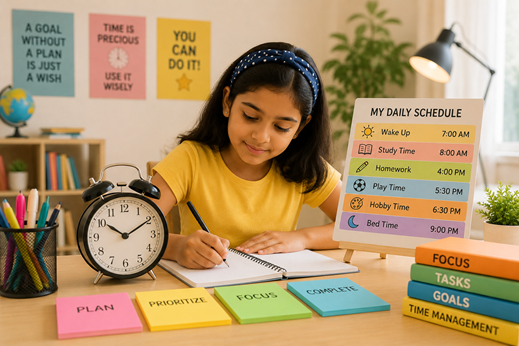
Why Time Management Matters for Kids. In a world where "just five more minutes" can turn into an hour of scrolling or playing, tea.. Read more »
Rockstar Anirudh’s @whythiskolaveri outstanding performance in Dallas. Really he blew the stage up! ONCE UPON A TIME TOUR.. Read more »
Hello USA and CANADA Chellams! We have a big announcement to make. Read more »

Indian actor R.Madhavan’s son fetches a gold medal for the nation R.Madhavan, who is currently enjoying a purple patch, has all t.. Read more »


Apr 16
Jan 25
Jan 21

A heavy thunderstorm in Agra has wreaked havoc at the entrance of the Taj Mahal complex on Wednesday night. The wind’s speed had crossed 100 .. Read more »

Fruit salad is one of my favorite dessert. A very easy, simple, less time consuming but very healthy. When I get colourful fruits, I go for thi.. Read more »

Bhubneshwar: Respecting women is still a ‘unobtainium’ in India. The video uploaded by the girl, who was molested by an old man sitting behind .. Read more »