What are the key components of AWS's global infrastructure
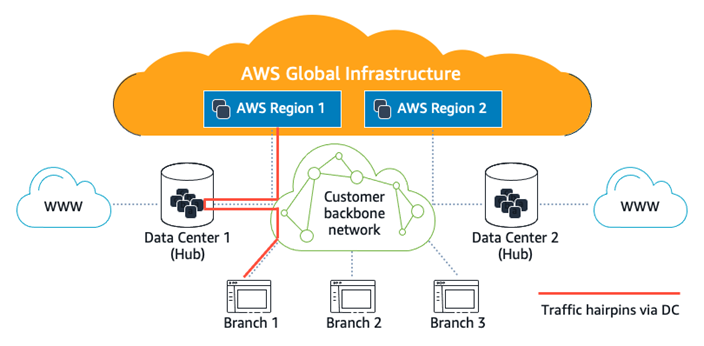
The key components of AWS's global infrastructure
- AWS cloud computing growth is comparably higher than the other cloud platforms in the market due to its scalability, cost-efficiency, and innovative services.
- Organization worldwide utilizes AWS due to the dynamic feature of AWS to enhance performance.
- With its pay-as-you-go pricing model, IT and non-IT can optimize their services based on their organization's needs and avoid significant upfront investments.
- The reason for its adoption across various industries and companies due to its reliable solutions for their sensitive data
- Its hybrid and multi-cloud architecture offerings, combined with disaster recovery capabilities, analytics, AI, and serverless computing, cater to diverse business needs.
- These crucial features empower businesses to innovate, scale, and remain competitive in a dynamic technological landscape.
Now, we shall discuss in detail the critical components of AWS.
Amazon Web Services (AWS) maintains a global infrastructure comprising several vital components to provide reliable and scalable cloud computing services. Some of them are discussed here:
Regions: The world is divided into geographic regions by AWS, each comprising several Availability Zones. Each region has its cluster of data centers. Regions include the US East (Northern Virginia), EU (Ireland), Asia Pacific (Tokyo), etc.
Availability Zones (AZs):
- A facility is an availability zone and may be found in either a rural or urban area. We can place several servers, switches, load balancing, and firewalls inside this facility or the data center. The data centers house the objects that communicate with the cloud.
- Multiple data centers can make up an availability zone. However, only one availability zone is counted if they are close together.
Edge Locations: AWS offers a global network of edge locations. AWS's Content Delivery Network (CDN) service, Amazon CloudFront, uses these locations. They aid in the distribution of content and the reduction of latency by caching content closer to users.
Data Centers: The physical data centers in the center of each region are home to the servers, storage, and networking hardware that underpin AWS services.
Global Content Delivery: AWS CloudFront, the content delivery service, uses a network of edge locations to distribute content globally with low latency.
Direct Connect Locations: These are network sites where users can connect to AWS via a dedicated network. As a result, communication between a customer's on-premises infrastructure and their AWS resources becomes more efficient and lower-latency.
AWS Direct Connect Gateway: Through this hub, numerous Virtual Private Clouds (VPCs) located in various AWS regions are linked by a single Direct Connect connection.
AWS Global Accelerator: This service aids in enhancing the performance and accessibility of apps with regional or international user bases. To route traffic to the best AWS endpoints, it makes use of the worldwide AWS network.
Regional Edge Caches: AWS services use these to enhance content delivery, boost performance, and reduce the burden on origin servers.
Networking Backbone: Regions, Availability Zones, and data centers are connected via AWS's worldwide network backbone. The numerous components of AWS's architecture can communicate and transmit data more quickly due to this network infrastructure.
Elastic Load Balancing: This service automatically breaks up incoming application traffic among several targets in one or more Availability Zones, including Amazon EC2 instances, containers, and IP addresses.
Global Database Replication: With the help of database services from AWS like Amazon RDS and Amazon DynamoDB, high availability, and disaster recovery are made possible across regions via global replication and failover.
AWS Wavelength: With the help of this service, AWS computational resources and 5G networks at the edge of the network may communicate with extremely low latency.
These components work together to provide AWS's customers with a highly available, scalable, and flexible global cloud infrastructure. Now that you would have understood the key components of AWS's global infrastructure.
Stay Connected to Indian America
Get the latest community stories, local events, entertainment and lifestyle updates delivered to your inbox.


