Top 4 Reasons to Use Java in Embedded Apps
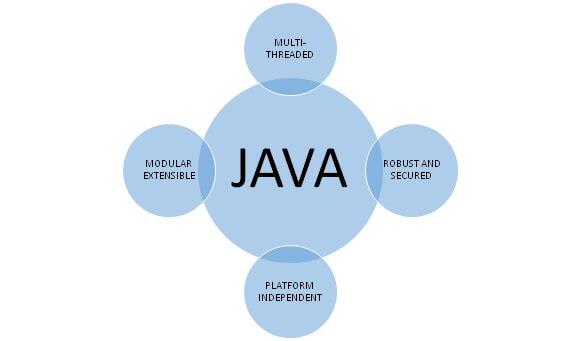
Internet is Intelligence in today’s time. As promised, everything from cars to light-bulbs is to be networked together with in-built intelligence. For instance, Philips recently publicized that it is coming up with internet-enabled lights through Apple store. For such networked and well programmable devices to work efficiently, they also require applications for collecting, processing and transmitting data. Conventionally, C is the programming language for all embedded systems. However, for faster explosion of connected, programmable devices, something better is needed, and that’s Java.
Java Development Since 1995
Java was developed in 1990s. It was mainly used to write applications for Star7 PDA, an embedded device. Later in 1995, Java was launched for general purpose computing platform. Even today, Java SE runtime uses only 64MB RAM on Windows XP platform. Typically low-end embedded systems either match or simply exceed such specifications.From the early beginning, Java was developed to work mainly in resource-constrained environments, which made it ideal for embedded systems of today. For instance, Oracle Java ME Embedded runs in 350KB ROM with 130KB RAM, now growing to 1.5MB ROM with 700KB RAM for full and standard configuration.
From the early beginning, Java was developed to work mainly in resource-constrained environments, which made it ideal for embedded systems of today. For instance, Oracle Java ME Embedded runs in 350KB ROM with 130KB RAM, now growing to 1.5MB ROM with 700KB RAM for full and standard configuration. Fact is that Oracle Java SE Embedded is created for powerful systems, but it still needs only 39MB ROM and 32MB RAM.
There are several factors that make Java a superior language for all embedded devices.
#1: Java is the Wheel of Embedded Systems
There are over 4000 standard class libraries of Java SE7 that covers everything starting from collections to concurrency and networking. With such an enormous collection of excellent APIs, it would take significantly lesser time to rewrite the standard functionality of embedded applications. Whilst some smaller parts of Java platform like Oracle Java ME Embedded doesn’t have several standard classes, they do have the richness of functionality. Most of the Oracle Java ME Embedded APIs target the requirements of embedded systems.
#2: Robust Application Codes
One of the greatest strengths of Java, which has also made it such a popular and reliable programming language, is its robustness. Languages like C and C++ generally use certain explicit pointers for reference memory. However, in Java, there are only implicit pointers, which can’t be manipulated by the application code. This can avoid all potential problems like memory access violation and buffer overruns, through those incorrect pointer calculations. Such situations can lead to an abrupt end of the application. In case of embedded systems, such errors are tougher to track down as there’s no device like a screen where errors could be displayed.
#3: Java is One Platform for All
Unlike most desktop machines or servers, these embedded systems have different resources, OS capabilities and architecture. When these systems are updated, the OS and processors also change significantly from its previous release. Contrarily, migrating applications that are written in C or assembler to any new platform is usually expensive, error-prone and expensive. Right from the start, Java is written once and run anywhere. Java porting code is non-event. If none of the existing APIs are changed, the pre-existing JAR (Java archive) or class files can be redeployed. To move to a newer Java version, just recompile.
#4: Java Virtual Machine Offers Added Benefits
JVM is the ultimate choice for embedded developers, which they cannot find with any natively compiled code. It can handle memory management automatically; memory allocation is done by instantiating the object instead of using explicit calls for library functions like malloc. Developers need not keep a record of object references or de-allocate memory explicitly; the garbage collector does it all. This reduces potential for any memory leak that could have a greater impact on the embedded systems, especially in cases when applications run for longer period of time in memory-constrained environment without restarting.
JVM also handles concurrency support. It can create as well as synchronize varied threads of execution right from the start.
Stay Connected to Indian America
Get the latest community stories, local events, entertainment and lifestyle updates delivered to your inbox.


