Enable Continuous Integration and Delivery for DevOps with DevOps Test Management
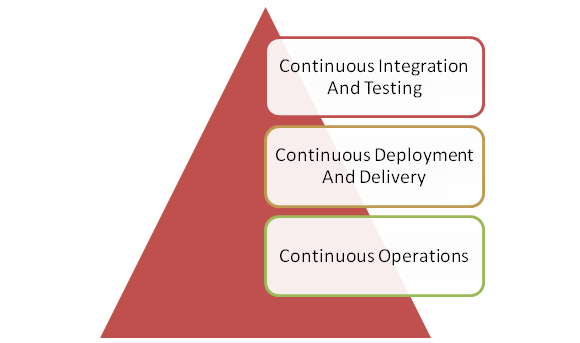
DevOps is a movement in the domain of data technology. Its main aim is to develop lean principles on the lines of business development, operations, and quality assurance departments. It aims to create a collaboration through which the organization can showcase and deliver its enhanced capabilities to the customers. The main aim of an enterprise adopting DevOps is to reduce the customer feedback time and seize the market opportunities at the earliest.
Test data management helps to create the right sized targeted database, rather than providing a generic solution. In the future, technology beyond DevOps would become more complicated leaving developers with no other option other than depending upon their colleagues to solve a problem. DevOps test management would play a big role to ensure that the chances of customer dissatisfaction are minimized.
Testing Principles and Capabilities in DevOps
Develop a test and sequence for a production like system to test the development, just as it is done in a software organization. Take a DevOps test data management to form the production data for continuous testing. This would help you to validate the system, before it is developed and designed completely and deployed in the operations. Besides this, it also helps to reduce challenges for the final deployment of production processes.
In order to manage smooth operations of the overall data structure, it is important to validate operational characteristics and continuously monitor the feedback loop in the test data cycle. The team developing particular DevOps applications needs to have continuous access of metrics to be absolutely sure that the application they are developing is working as per the requirement. Testing is important to ensure integration, functionality, security and performance quality of the product and also gives an idea of how the customers are interacting with it.
It has been observed that functional testing is only limited to the sphere of the application’s behavior, while DevOps test data management allows the developers to form an idea whether the application is a failure or success. It helps to identify hidden errors, so that an organization can quickly rectify them and the process of continuous integration is not hampered.
DevOps and Test Automation
DevOps is not just a minor infrastructure or production planning idea. It calls for a complete overhaul of the organization’s work culture. In order to ensure that this change is properly implemented a huge amount of test data needs to be deployed and checked in the QA environment. Manual testing is not an option that you can even consider while implementing such a huge change. Specialized automation testing tools and continuous integration tools along with a mature automation testing framework are used to achieve this integration. Here are some important points regarding DevOps testing, which you should bear in mind to achieve speed and agility
- Identify the test cases that are required for a particular build
- Ensure that your test execution is lean and crisp
- Grow an environment where the QA and the Dev operators can sit together and discuss a particular build area where the test cases have failed
- Configure coverage tools and specialized code analysis to make sure you are able to achieve almost 100% code coverage.
- Give up the concept of executing all regression test cases for a test
- Work on a strategy to build new features which can be used in QA.
- All the environments that are required for testing should be designed using a standardized protocol and an automatic deployment method should be followed.
- Create framework where a process can function in conjunction with parallel execution of tests. This would help to reduce time and help to achieve a successful DevOps implementation.
DevOps is a new movement and is gradually assuming a very critical role for the success of innovative IT companies. Test management forms a very integral part of the DevOps capabilities to ensure that continuous software delivery is possible.
Stay Connected to Indian America
Get the latest community stories, local events, entertainment and lifestyle updates delivered to your inbox.


