Learning Sarangi? Know Your Instrument Well
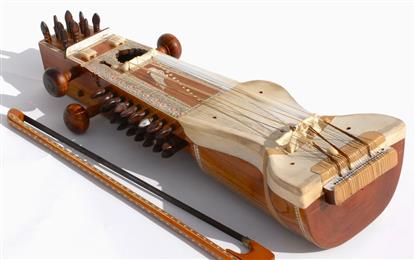
Sarangi is a one of the most important musical instruments of Indian classical music. It has 3 main playing strings and a number of sympathetic strings. The musical instrument Sarangi has no fingerboard and the strings float in the air. Sarangi instrument has been traditionally associated with the Kathak dance and the vocal styles of Dadra, Thumri and Kheyal. It was also associated with an Indian version of Geisha tradition known as Tawaif.
Are you a beginner in Sarangi? Yes, Then this Sarangi Lessons can educate and give enough knowledge about the instrument and Sarangi music.
Introduction:
Sarangi players can perform the words of classical songs which are present in their mind. The performance of Sarangi adheres to the principles of vocal performance. It is carved from a single block of wood and is box-like in shape. It is around two feet long and about half a foot wide. The bridge of instrument supports the pressure of numerous strings.
In Sarangi instrument, there are three strings which are comparatively thick, tight and short. They are bowed with a heavy horsehair bow and stopped with the nails, cuticles and surrounding flesh. Talcum powder is used for providing lubrication to the fingers while playing the instrument. Rest of the strings of Sarangi, are for resonance and the number is up to 35. The lowest level comprises of a diatonic row of 9 tarabs and a chromatic row of 15 tarabs.
Sarangi lessons are interesting and continue to attract lovers of Indian classical music across the world. The instrument was commonly used by Indian musicians who created folk compositions. Various Sarangis include Sarinda, Sindhi Sarangi, Dedh Pasli Sarangi, and Gujratan Sarangi.
The Origin
Origin of the word “Sarangi” is not exactly clear and the word Sarangi means “a hundred (Sau) colors (rang)”. This meaning indicates its versatility to a wide range of musical styles, its flexible tuning ability, and its ability to produce a large palette of tonal color and emotional nuances. The multiplicity of colors refers to the richness of the sound of instrument and this etymology is not universally accepted.
Some musicians describe the word Sarangi as a combination of two words “Seh” (Persian equivalent of three) and “Rangi” (Persian equivalent of colored). The term Seh-Rangi, Seh represents the three melody strings. It refers to any unfretted bowed Indian instrument which has a bridge resting on skin or some other membrane.
How to Play Sarangi Instrument?
Sarangi lessons include how to hold the instrument. The instrument is positioned in such a way that the uppermost part is placed on the lap and the other end rests against the left shoulder. The instrument is played with a horse hair bow which is held in the right hand. The left hand finger is used for stopping the strings. The most important aspect of Sarangi is that the strings are stopped with the sides of finger nails and not by the balls of fingers. Players often use talcum powder on their palms to facilitate the gliding of the hand up and down the neck.
Today the instrument Sarangi has not lost complete existence because of prominent musicians like Pandit Ram Narayan and Ustad Sabri Khan who are regarded as Sarangi maestros.
Stay Connected to Indian America
Get the latest community stories, local events, entertainment and lifestyle updates delivered to your inbox.


