A Beginners Guide for Violin Enthusiast!
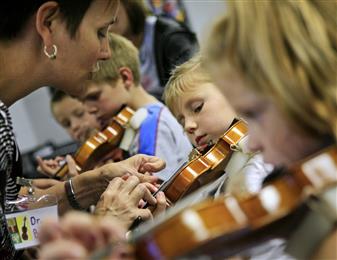
Violin is one of the best musical instrument. It offers a wealth of sound, technique and theory. It has remained one of the most popular instruments of modern times. Its sound and playing style has adapted to a variety of forms and genres from folk to rock and pop.
The violin’s origin dates back to the medieval European period when the musicians used bowed string instruments known as fiddles for accompaniment. During the period of Renaissance, three string violin came into existence in the early 16th century. The predecessors of violin’s include the Rebec and the Lira da braccio.
Tips on Staying Comfortable While Playing and Holding Violin
To get your violin lessons right, first and foremost thing to know about is the basics of a violin instrument. In a violin lesson lass, you learn to play the violin and the basics on how to hold a violin. Holding a violin incorrectly would give you neck head, shoulder and arm aches. The key is to learn how to hold a violin instrument in the correct way and relax.
- Make sure your violin is of the correct size to fit in between your chin and arms, before you buy it
- Keep the instrument straight to support your back properly
- Rest your left jawbone on the chin rest. The violin master should have already fitted the correct chin rest to your face which feels natural. The normal weight of your skull would apply plenty of pressure and your neck should feel relaxed and not strained.
- Hold an instrument perpendicular to the floor straight out in front and settle it in that arch between your thumb and forefinger of your hand
- Turn the hand slightly upwards so your four fingers curl round the fingerboard
- Bend your elbow naturally and it forms a triangle shape with the violin
- Move the violin down and forward just a touch to rest comfortably on your upper body
Why Learn the Violin?
Apart from being fun to play this lovely musical instrument, in a violin lesson class you would get to be learning the benefits of the instruments and it offers numerous physical and mental benefits for both kids and adults.
- Posture: An individual requires good posture to play the violin. Right posture is important not only to get the best sound from the instrument, but also to reach all the strings and play with comfort. Enough practice is required to get a good posture and it becomes a natural habit.
- Strength and Flexibility: Violin helps to develop strength and flexibility, specifically for kids. Holding the violin, bowing and building muscle memory contribute to stronger arms and fingers.
- Co-ordination and Memory: While playing a single note in Violin, it involves pressing down on the neck with one hand while pulling the bow across the strings with the other hand. When you start playing the violin, you feel free to use finger charts and other cheat sheets. However, you can’t rely on those forever and you have to memorize note values, musical notation, finger and bow positions.
- Attention Span: An individual has to focus on playing the violin and reading music. When you are playing within a larger ensemble, you have to add the conductor and the rest of the band to the equation and exercise your overall concentration abilities.
These basic ideas can truly help you do your best during Violin lessons.
Stay Connected to Indian America
Get the latest community stories, local events, entertainment and lifestyle updates delivered to your inbox.


