How Security Classification Guides Strengthen Data Protection in Modern Cybersecurity
What Is a Security Classification Guide in Cybersecurity?
In today’s digital world, organizations handle massive volumes of sensitive information—from customer records to confidential business intelligence. To protect this data effectively, cybersecurity teams rely on a structured document known as a Security Classification Guide (SCG). This guide defines confidentiality levels, handling sensitive data rules, and the exact conditions under which information can be accessed, shared, or declassified.
A well-implemented SCG strengthens an organization’s defense strategy, aligns with regulations, and supports information assurance by ensuring data is consistently protected across all teams and systems.
Understanding the Purpose of a Security Classification Guide
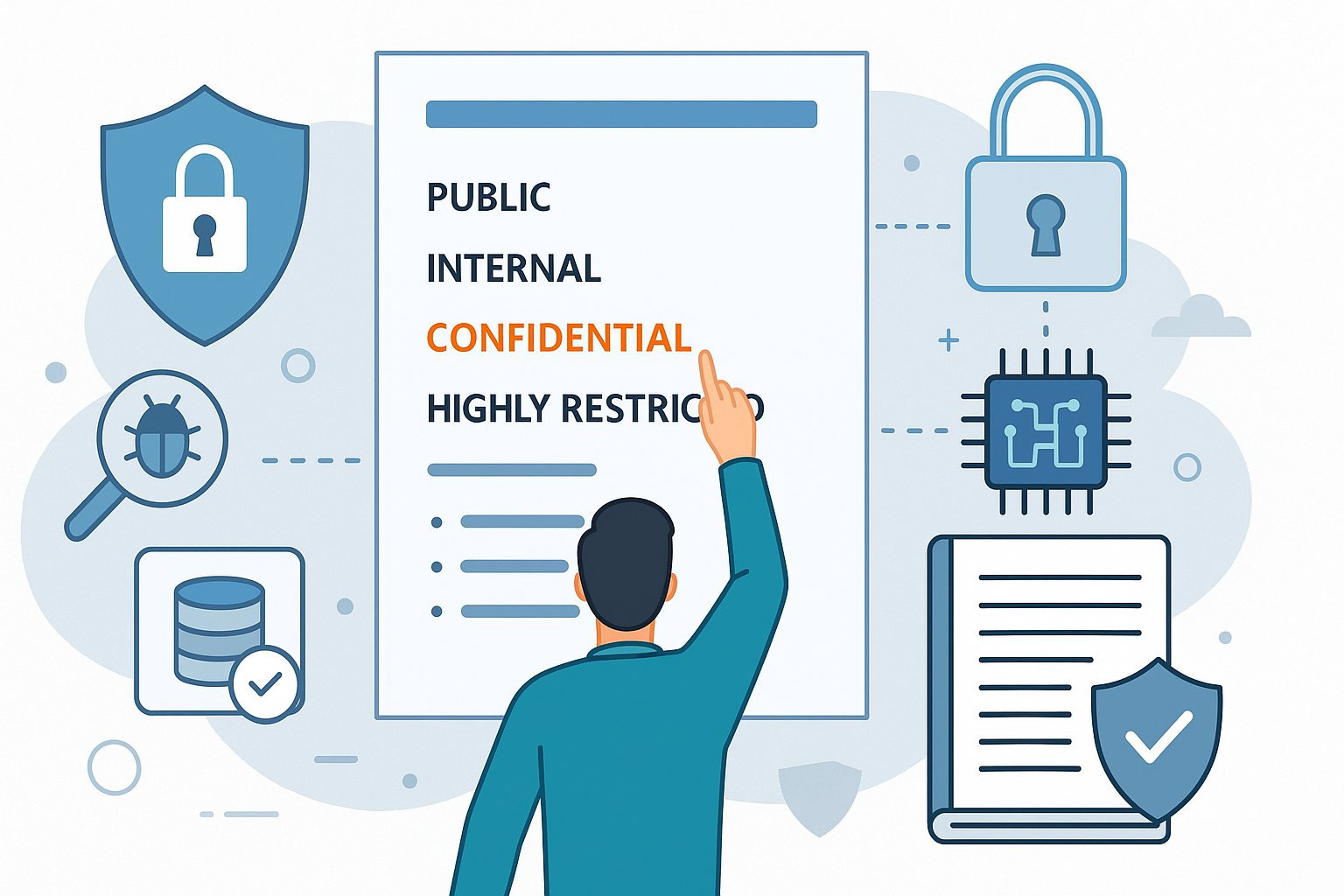
A Security Classification Guide is an official document that provides precise instructions on how different types of information must be classified and protected. It acts as an extension of the organization’s data classification policy, helping employees understand whether information is “Public,” “Internal,” “Confidential,” or “Highly Restricted.”
The SCG clarifies:
- What data belongs to each classification level
- Who can access the information
- How information should be stored, transmitted, and disposed
- When and how declassification procedures can be applied
This ensures consistent, organization-wide compliance with data protection standards, supporting both operational security and regulatory requirements.
How SCGs Strengthen Data Security
A robust Security Classification Guide brings multiple cybersecurity elements together:
1. Clear Definition of Confidentiality Levels
The guide outlines the impact of unauthorized disclosure and sets rules for:
- Public information
- Internal data
- Restricted or confidential information
- Highly sensitive or regulated data
These confidentiality levels ensure that each piece of information receives the right protection.
2. Access Control Rules for Every Classification
The SCG integrates strict access control rules to ensure only authorized individuals can view or modify sensitive data. This includes guidelines related to:
- Role-based access control (RBAC)
- Multi-factor authentication (MFA)
- Least privilege principle
- User access reviews
These practices reduce internal risks and ensure sensitive information is only accessed when absolutely necessary.
3. Handling and Storing Sensitive Data
The guide provides clear procedures for handling sensitive data, including storage, encryption, sharing protocols, and destruction guidelines to maintain strong data governance.
Security Classification Guides and Modern Cybersecurity Technologies
Today’s cybersecurity operations rely heavily on automated systems. SCGs support these technologies by defining the rules that automated tools follow. Examples include:
- Automated Document Classification for categorizing files based on sensitivity
- Threat Intelligence Analysis to detect emerging cyber risks
- Anomaly Detection in Communication to identify suspicious network behavior
- Log File Parsing for reviewing system activity and detecting deviations
When combined with a strong classification guide, these technologies enhance visibility and reduce response time during security events.
Stay Connected to Indian America
Get the latest community stories, local events, entertainment and lifestyle updates delivered to your inbox.


